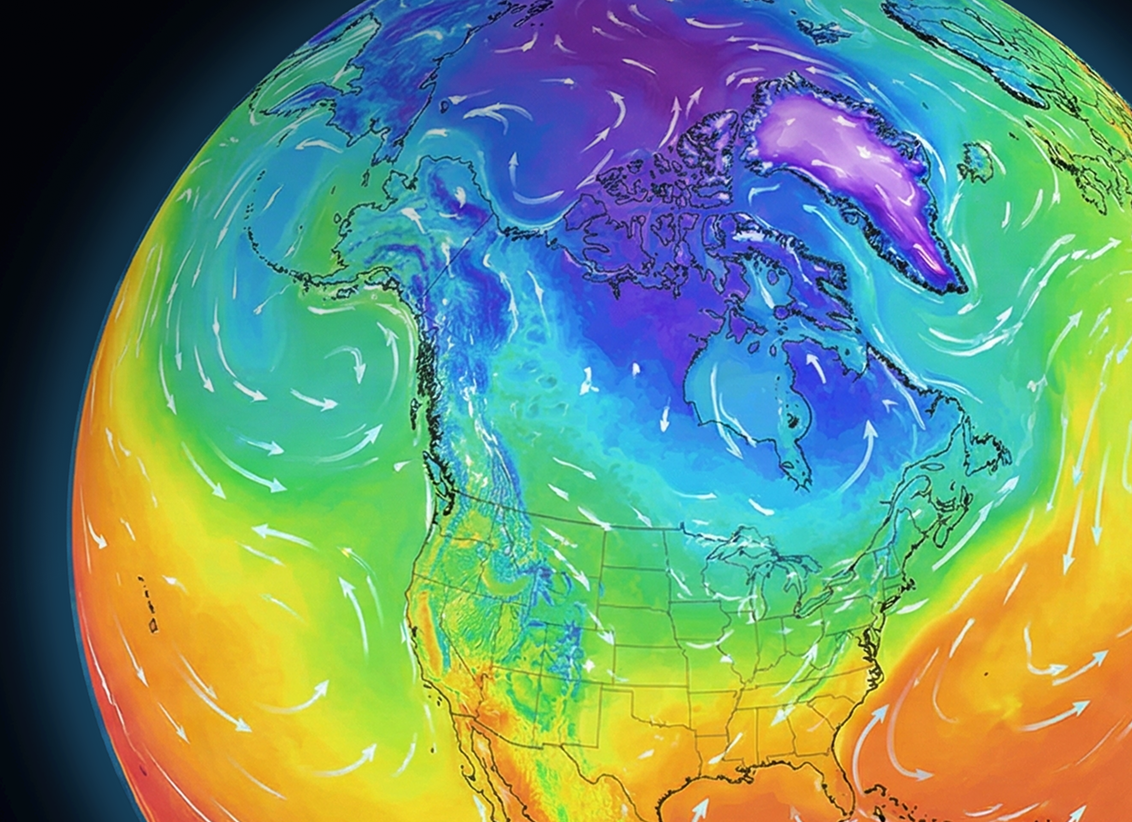
Jupiter AI - Access global data using natural language hero image
Enterprise SoftwareOverview

Jupiter AI

Access global data using natural language

TL;DR

  1. The solution is: Built the AI-powered natural language querying platform powering Jupiter's ClimateScore Global enabling anyone in an enterprise to ask complex climate risk questions without data science expertise

  2. Engineered a text-to-SQL pipeline that translates conversational queries into precise database operations across a dataset of over 400 trillion data points spanning 25,000+ open-source climate data elements at ~90m resolution worldwide

  3. Delivered downloadable analytics with domain-specific graphs, tables, and visualizations giving governments, insurers, and asset managers decision-ready outputs in seconds rather than days

The Challenge

Climate risk is now a boardroom issue. Governments face mandatory disclosure requirements. Insurers need to reprice portfolios against physical risk. Asset managers must quantify how extreme weather events will affect the value of holdings through 2100. The data to answer these questions exists: Jupiter Intelligence had built one of the most rigorous climate science platforms in the world, covering physical risk from all perils at any point on Earth's land surface.

The problem was access. Jupiter's ClimateScore Global database was vast and sophisticated, but interacting with it required specialized knowledge. Users needed to understand data schema, query structure, and climate science terminology to extract what they needed. That created a two-tier system: the data scientists and analysts who could navigate the platform directly, and the executives, risk officers, and regulators who needed the answers but had to wait for someone else to retrieve them.

This bottleneck had real costs. Every time a portfolio manager needed to understand the climate-adjusted value of a facility, or a government agency needed to map the insurability risk across a region, the request had to pass through a technical intermediary. Analysis that should take minutes took days. The growing urgency of climate risk disclosure requirements made this throughput problem increasingly untenable.

Jupiter needed to democratize access to its own platform: to build an interface that let any user, regardless of technical background, ask questions in plain language and receive comprehensive, visualized answers. The challenge was doing this at the scale and complexity of a dataset measuring 400 trillion data points, without compromising the scientific rigor that made Jupiter's data trustworthy.

Key Results

  • Natural language access to 400+ trillion data points across Jupiter's ClimateScore Global database

  • 25,000+ open-source climate data elements queryable at ~90m resolution for any location on Earth

  • Risk projections through 2100 covering all physical climate perils

  • Jupiter AI launched publicly June 2024; won 2025 AI Excellence Award (AI for Social Good)

  • Platform extended to developing nations via UNDP partnership covering 95% of previously uninsured climate risk regions

The Solution

01

Turning Plain Questions Into Database Queries

The core challenge was letting anyone ask complex climate risk questions in natural language and get a precise answer from a database of 400 trillion data points. A question like "which of my assets have the greatest flood risk over the next 30 years" requires the system to understand multiple dimensions at once: geography, time horizon, peril type, and financial scope. We built the pipeline that translates those questions into the correct database operations and returns structured results in seconds.

02

Working With 25,000 Climate Elements at Building-Level Precision

Jupiter's data covers 25,000 climate variables at roughly 90-metre resolution across the entire surface of the Earth, with risk projections out to 2100. Building a natural language interface over data at this scale required careful decisions about which data elements are relevant to a given question and how to present results in a form that is accurate and useful to someone who is not a climate scientist.

03

Guiding Users Toward Questions They Did Not Think to Ask

One of the biggest barriers to useful climate risk analysis is that users often do not know what they should be asking. Jupiter AI addresses this by suggesting follow-on questions after each response. After a user asks about flood risk to a building, the platform might suggest looking at the same asset over a longer time horizon, or at adjacent assets, or at the downstream financial implications. The platform becomes an active guide rather than a passive search tool.

04

Results You Can Download and Present

Raw query results are useful. Interpreted results are actionable. AE Studio built the output layer to deliver domain-specific graphs, tables, and charts that communicate risk in terms relevant to each user's role. Users can filter data directly in the chat and download formatted outputs suitable for stakeholder presentations, regulatory submissions, and investment reports. The journey from question to decision-ready deliverable happens in one interaction.

05

Security Built for Enterprise and Government Clients

Jupiter's customers include governments, insurance companies, oil firms, and asset managers with strict requirements around data security and access control. We designed the platform so that each user's query access is scoped to their permissions, portfolio data does not leak between organisations, and every action can be audited. The platform needed to be open enough for broad use while maintaining the data integrity that regulated clients require.

06

The Same Interface for the CFO and the Facilities Manager

The goal was to make Jupiter's climate science accessible to every person in an enterprise, not just the data team. A portfolio manager asking about financial exposure and a facilities manager asking about flood risk to a specific building use the same interface. The system shapes its output around what each question actually needs. Jupiter AI launched publicly in June 2024 and won the 2025 AI Excellence Award for AI for Social Good.

Results

Key Metrics

  • Natural language access to 400+ trillion data points across Jupiter's ClimateScore Global database

  • 25,000+ open-source climate data elements queryable at ~90m resolution for any location on Earth

  • Risk projections through 2100 covering all physical climate perils

  • Jupiter AI launched publicly June 2024; won 2025 AI Excellence Award (AI for Social Good)

  • Platform extended to developing nations via UNDP partnership covering 95% of previously uninsured climate risk regions

The Full Story

AE Studio built the AI platform that transformed Jupiter's ClimateScore Global from an expert-access database into an enterprise-wide climate risk tool. The natural language interface, text-to-SQL pipeline, visualization layer, and security architecture AE delivered form the core of Jupiter AI as shipped.

The platform enables any user, regardless of technical background, to query over 400 trillion data points covering 25,000+ climate data elements at ~90-meter global resolution, receive visualized results in seconds, and download decision-ready analytics for regulatory and investment reporting. Proactive query suggestions guide users toward insights they would not have found independently.

Jupiter AI launched publicly in June 2024. Jupiter CEO Rich Sorkin described the system as reinventing how users access data: "Using Jupiter AI requires no background in data science or analytics. You can simply ask a question about your portfolio's risk exposure or change in value over any duration, and in moments, receive the insights you're looking for."

The platform won the 2025 Artificial Intelligence Excellence Award in the AI for Social Good category. Through the Jupiter Promise partnership with UNDP, the platform's capabilities now extend to developing nations where 95% of climate risks remain uninsured. Jupiter processes and analyzes risk data covering 22.3 billion locations worldwide.

Conclusion

In summary, climate risk is becoming a universal business requirement, but the data to assess it has historically been accessible only to those with specialized technical skills. As a result, Jupiter Intelligence had the science. The gap was between what the data could tell you and who could ask the question.

AE Studio built the bridge: a natural language interface backed by a text-to-SQL engine capable of operating at the scale of 400 trillion data points, with visualization outputs shaped for decision-makers rather than data scientists. Furthermore, the result is a platform that has extended Jupiter's reach from data science teams to entire enterprise organizations, and through the UNDP partnership, to nations and communities that need climate risk intelligence most.

This project represents what AE Studio does at its best: finding the leverage point where a relatively contained technical investment unlocks the value of a much larger one.

Key Insights

  1. Natural language interfaces unlock the value already inside your data. Jupiter's climate science was world-class before Jupiter AI existed; the bottleneck was access. Building a conversational layer on top of existing infrastructure can compound the value of years of prior investment.

  2. Text-to-SQL for complex domains requires deep domain modeling. Climate risk queries span geography, time, peril type, financial metric, and portfolio scope simultaneously. Building a natural language system that handles that dimensionality required more than generic NLP; it required encoding Jupiter's data architecture into the query generation logic.

  3. Proactive suggestions are a feature, not a bonus. Users who don't know the right questions to ask will miss critical insights. A system that guides users toward what they should be asking turns a query tool into an analytical partner.

  4. Enterprise security cannot be an afterthought on conversational AI. When natural language interfaces touch sensitive portfolio data across regulated industries, access scoping, output auditability, and cross-organizational data isolation are core product requirements, not post-launch patches.

  5. Democratizing expert data creates social value beyond the original use case. A platform built for governments and insurers, when made accessible to any user regardless of technical background, becomes a tool for communities and smaller organizations that previously couldn't access sophisticated climate risk analysis.

Key Terms

AI Digital Twin
An AI digital twin is defined as a persistent, updatable computational model of an entity — such as a person, asset, or system — that mirrors the real-world subject's state, behaviour, and knowledge over time.
Belief System
A belief system in AI refers to a structured knowledge representation that captures an agent's understanding of the world, including facts, relationships, and inferred conclusions, which updates as new information is received.

Implementation Details

01

Text-to-SQL: Translating Human Questions into Database Precision

The core technical challenge was bridging natural language and structured data at scale. Climate risk queries are not simple lookups: they span multiple dimensions simultaneously: geographic location, time horizon, return period, peril type, financial metric, and portfolio scope. A question like "show me the top ten losses across my portfolio" or "which assets have the greatest insurability risk" requires the system to correctly infer all of these dimensions from conversational input and translate them into precise SQL operations against a database of 400 trillion data points.

AE Studio built the text-to-SQL pipeline that powers Jupiter AI's query engine. The system interprets natural language, maps it to the correct climate data elements, generates the appropriate query, executes it against the ClimateScore Global database, and returns structured results in seconds.

02

Scope of the Data: 25,000 Climate Elements at 90-Meter Resolution

Jupiter's ClimateScore Global platform covers 25,000+ open-source climate data elements for approximately 90-meter resolution cells worldwide a level of geographic granularity that enables asset-level risk analysis for any point on Earth's land surface. Risk projections extend to 2100, covering physical risk from all climate perils.

Building a natural language interface over data at this scale required careful architectural decisions. The query system needed to understand not just what a user was asking, but which subset of 25,000 data elements was relevant to their question, and how to aggregate, filter, and present that data in a form that was both scientifically accurate and practically useful to a non-specialist audience.

03

Proactive Query Guidance: Surfacing What Users Don't Know to Ask

One of the most significant barriers to effective climate risk analysis is the problem of unknown unknowns users often don't know the right questions to ask, which means they miss critical insights even when the data is available.

Jupiter AI addresses this through a proactive suggestion system that recommends follow-on queries based on a user's initial question. After receiving an answer, the platform guides users toward the next logical steps in their analysis related perils, longer time horizons, adjacent assets, downstream financial implications. This feature transforms the platform from a passive query interface into an active analytical guide.

04

Visualizations and Downloadable Analytics

Raw query results are useful; interpreted results are actionable. AE Studio built the output layer of the Jupiter AI platform to deliver domain-specific context through graphs, tables, and visualizations that communicate risk in terms relevant to each user's role and decision context.

Users can filter data directly in the chat interface and download formatted outputs suitable for stakeholder presentations, regulatory submissions, and investment committee reporting. The result is a platform that compresses the journey from question to decision-ready deliverable into a single interaction.

05

Security Architecture for Enterprise and Government Clients

Jupiter's customers include governments, oil companies, insurers, and asset managers organizations with stringent requirements around data security, access controls, and auditability. A natural language interface that queries sensitive portfolio data introduces security considerations that a conventional analytics platform does not face.

AE Studio designed the platform's security architecture to meet enterprise standards: ensuring that conversational query access is scoped appropriately to each user's permissions, that portfolio data does not leak across organizational boundaries, and that the system's outputs can be audited. The platform needed to be open enough for broad enterprise use while maintaining the data integrity that Jupiter's most regulated clients require.

06

Democratization at Enterprise Scale

The product objective was to make Jupiter's gold-standard climate science accessible to every member of an enterprise, not just the data science team. A risk officer, a sustainability lead, a C-suite executive, and a regional operations manager each need different slices of the same underlying data, expressed in different terms, at different levels of detail.

The conversational interface AE Studio built handles this by meeting users in natural language: the same interface serves a portfolio manager asking about financial exposure and a facilities manager asking about flood risk to a specific building. The same database, the same rigor, with outputs shaped by what each user's question actually needs.

Jupiter AI launched publicly in June 2024 and won the 2025 Artificial Intelligence Excellence Award in the AI for Social Good category, recognized for making critical climate science accessible to organizations regardless of their technical resources.

Frequently Asked Questions

The text-to-SQL pipeline interprets a user's natural language question and maps it to the correct combination of climate data elements, geographic scope, time horizon, return period, and financial metric from Jupiter's schema. Because Jupiter's database covers 25,000+ data elements with complex interdependencies, the system needed to encode deep knowledge of the data architecture not just general NLP capabilities to generate queries that are both syntactically correct and scientifically meaningful. The pipeline executes against the ClimateScore Global database and returns structured results in seconds.
Jupiter's customers include governments, oil companies, insurers, and asset managers assessing portfolio and asset-level climate risk. Typical queries include portfolio-level risk summaries ("show me the top ten losses across my portfolio"), asset-specific projections ("show me the climate-adjusted value of my largest facility over time"), and insurability assessments ("which assets in my portfolio have the greatest insurability risk"). The platform is designed to serve both expert users who previously queried the database directly and non-technical users executives, risk officers, sustainability leads who previously had to request analysis from a data science intermediary.
After returning results from an initial query, Jupiter AI proactively recommends follow-on questions based on the analysis so far. These suggestions are generated from the context of the user's question and the data returned for example, surfacing adjacent perils, downstream financial impacts, or related portfolio exposures the user may not have considered. This feature addresses one of the fundamental problems with expert data systems: that users often don't know the right questions to ask, which means they miss critical insights even when the data is available.
The platform's security architecture ensures that conversational query access is scoped to each user's permissions portfolio data does not cross organizational boundaries, and the system's query and output activity can be audited. This was a core design requirement given Jupiter's customer base of regulated industries including government agencies, insurers, and financial institutions. The natural language interface had to be accessible without being permissive: open enough for broad enterprise use while maintaining the data integrity standards Jupiter's most scrutinized clients require.
Through the Jupiter Promise partnership with UNDP, Jupiter AI's capabilities have extended to developing nations where 95% of climate risks remain uninsured. The platform now analyzes risk data covering 22.3 billion locations worldwide. The 2025 Artificial Intelligence Excellence Award recognized Jupiter AI specifically in the AI for Social Good category for making sophisticated climate science accessible to communities and organizations that previously lacked the technical resources to access it a direct outcome of the democratization mission that drove the platform's design.
OverviewEnterprise Softwareintermediate7 min readNatural Language ProcessingText-to-SQLClimate RiskData PlatformConversational AIEnterprise SoftwareClimate TechData VisualizationAI Chatbot

Published: · Last updated:

Ready to build something amazing?

Let's discuss how we can help transform your ideas into reality.

Building the AI Platform That Makes 400 Trillion Climate Data Points Accessible